

Mold Testing in Addison, Texas
What Mold Testing Actually Establishes
Addison counts about 17,000 residents across 4.35 square miles. The town incorporated in 1953 to avoid annexation by Dallas, built its airport in 1956, and voted in 1976 to legalize alcohol sales in order to draw restaurants and hotels. Most of what stands here today went up during or after that stretch.
That history matters for one reason. Mold does not arrive on its own. It follows water, and water follows the seams, penetrations and equipment that a building acquired the year it was built and every year it was altered afterward. Finding the mold is the easy half. Finding what is keeping it wet is the half that decides whether it comes back.
Mold Test DFW performs mold testing and assessment work. We do not sell the cleanup that follows, so the size of a remediation scope is not something we have a stake in. What you receive is a document you can hand to whoever needs to act on it.
What Texas Law Counts as a Mold Assessment
Texas defines this work rather than leaving it to marketing language. Under Texas Occupations Code Sec. 1958.001(5), mold assessment means three distinct activities:
- an inspection, investigation or survey of a dwelling or other structure, carried out to give the owner or occupant information about the presence, identification or evaluation of mold
- the development of a mold management plan or remediation protocol
- the collection or analysis of a mold sample
Mold testing that meets any part of that definition is licensed work in Texas. Two phrases in the definition are worth noticing. “Or other structure” means the statute is not limited to houses. “Or occupant” means the person living or working in the building is a proper recipient of the findings, not only the person who holds the deed.
100% Privacy Guarantee
Assessment and Cleanup Cannot Be the Same Company
Writing a remediation protocol is assessment work under that same definition. The assessor sets out the affected rooms and materials, and the remediation contractor works to that definition. This is the part that keeps a scope honest, because the boundaries of the job get drawn before anyone holding a demolition invoice draws them.
Sec. 1958.155(a) states that a license holder may not perform both mold assessment and mold remediation on the same project. Subsection (b) bars a person from owning an interest in both the assessment entity and the remediation entity on one project. We assess. You engage a remediation contractor separately, and that separation is a requirement of Texas law rather than a policy we adopted.
Samples collected during mold testing go to a laboratory for analysis, and under Sec. 1958.001(5)(C) that analysis is itself assessment activity. The report names what the laboratory found, what it did not find, and which surfaces and air volumes those results describe.
100% Privacy Guarantee
Where Water Shows Up Is Rarely Where It Started
Water almost never announces itself where it enters. It enters high and lands low, runs along the top of a joist or the back of a stud until something interrupts it, and then soaks whatever it finds there. The stain on a ceiling marks the low point of that path, not the hole that started it.
That is why mold testing treats a stain as the end of a trail rather than as the subject of the investigation. Cutting out the wet drywall and repainting solves the visible half and leaves the source running. Two months later the same spot is back, and by then the material behind it has been wet the entire time. Multi-family buildings have their own version of this, which we cover on our apartment mold testing page.
100% Privacy Guarantee
How the Moisture Gets Mapped
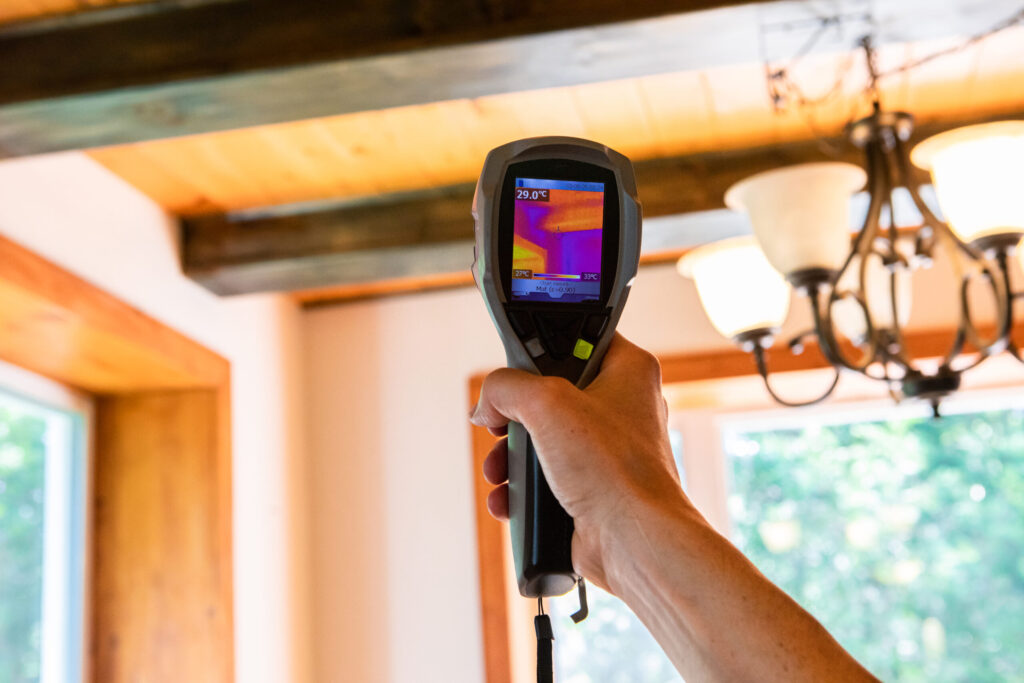
Mold testing starts with the water rather than with the sample. Moisture gets mapped across the affected assemblies and traced back toward its origin, instead of being sampled wherever the discoloration happens to be darkest.
The pattern of the wetting carries most of the information. A ceiling wet around its edges and dry in the middle tells a different story from one wet in a single patch directly under a fixture. Material that is wet on one face and dry on the other points somewhere different again. Air movement then spreads the smell well past the wet area, which is why the room where you notice it first is often not the room with the problem. Where a conclusion depends on opening something up, the finding should say so plainly instead of filling the gap with an assumption.
Addison Building Stock and Where Water Turns Up
Addison went from 595 residents in 1970 to 5,553 in 1980 and 14,166 by 2000. Much of what stands here dates from that run, and buildings of that vintage share some habits. Roofs have usually been recovered at least once. Original heating and cooling equipment has been swapped for larger units without the drain lines being rebuilt to match. Walls have been moved, so what is drawn on file and what is actually above the ceiling are not always the same drawing.
Age by itself does not cause a problem. What it does is multiply the number of concealed transitions where two assemblies meet, and concealed transitions are where water travels without being seen.
The Places That Stay Wet Longest
Mold testing in an older Addison building spends most of its time at a short list of places. Some spots hold water long after the leak that delivered it has stopped. Insulation that stops short of a fitting will collect condensation every humid week of a North Texas summer. A pan under a cooling unit that drains slowly will keep the cabinet above it damp. A floor drain that was covered over rather than removed will hold standing water indefinitely. None of this is exotic, and all of it is easier to find when someone is looking for the moisture source rather than for a convenient place to take a sample.
Signs That Justify Mold Testing
A musty smell that returns after a building has been closed up over a weekend is worth taking seriously. So is staining that reappears in the same spot after the surface has been replaced, and so is the same room feeling humid when the rest of the building does not. Each of those points to a source that is still wet rather than a spill that dried.
Visible growth on a hard, non-porous surface is often a cleaning question rather than a mold testing question. Growth on drywall, ceiling tile, carpet backing or the paper facing of insulation is a different matter. Those materials hold water, and the growth usually means the moisture has been present for a while.
Scheduling Mold Testing in Addison
A few details gathered before the visit make the whole thing faster. Useful to have ready:
- what is being seen or smelled, where in the building, and how long it has been noticeable
- any known water event, whether that is a roof leak, a supply line, an appliance or a storm
- whether anything has already been cleaned, replaced or repainted
- whether the problem changes with the weather or with the season
That last one is more useful than it sounds. A problem that worsens after rain points at the exterior envelope. One that worsens during a long hot stretch points at condensation somewhere in the cooling system. Knowing which of those you are dealing with changes where the first hour gets spent.
What Happens On Site and in the Report
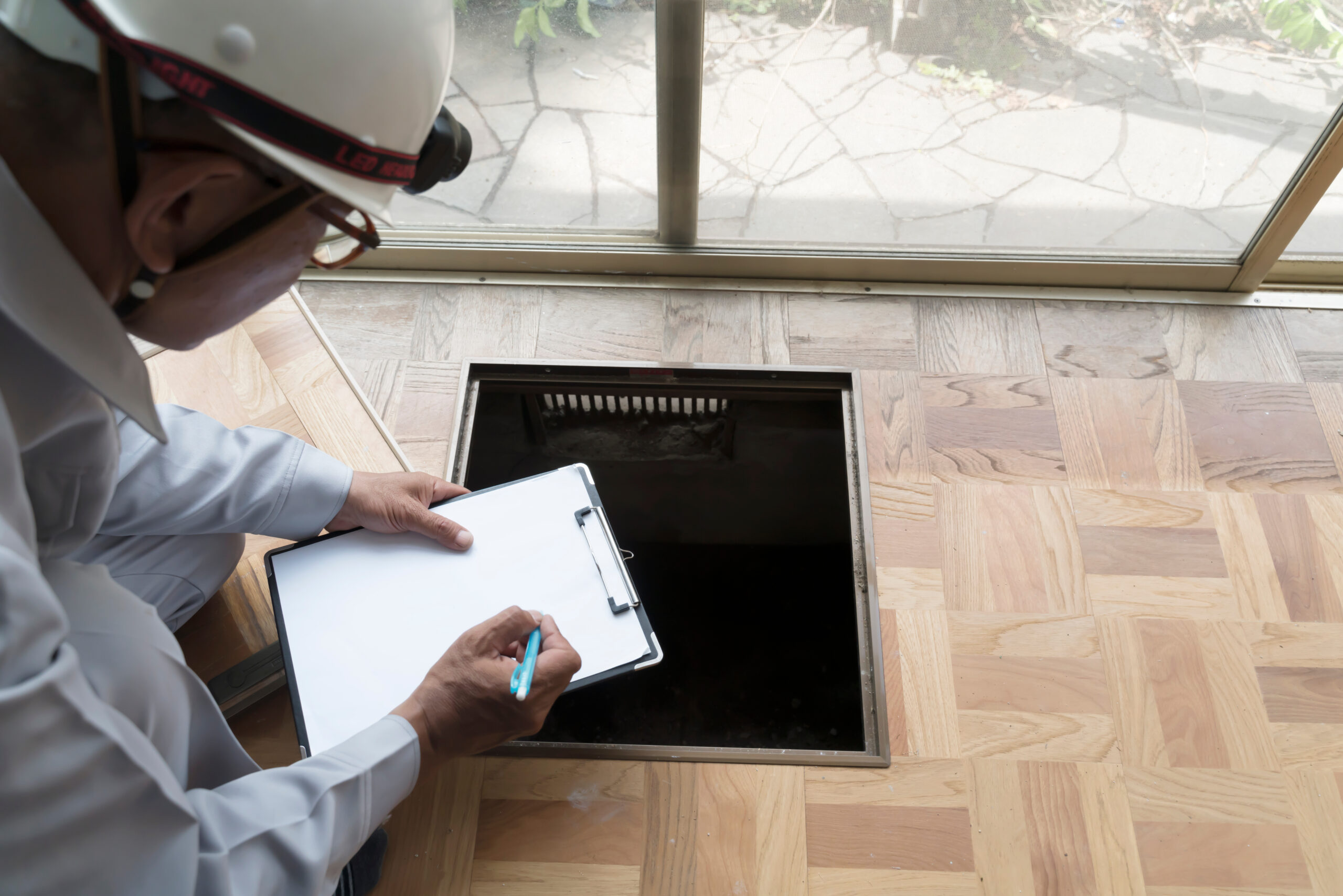
Mold testing on site is mostly measurement. Conditions get documented in the affected areas, and moisture readings get taken across the assemblies involved. Samples get collected where the finding will actually turn on laboratory results, not to pad a count. Locations are identified by room and by position within the building, so a reader who was not present can find the same spot.
Where remediation is warranted, the protocol specifies the rooms, the material quantities and the clearance criteria. That document goes to a licensed remediation contractor of your choosing.


He was able to get in, do a complete thorough walkthrough, send samples off to the lab, and write a report up for us (that included a massive amount of broken down details), all before our option period ended.
Highly recommend using this company for anything, they definitely don’t disappoint!



What really stands out is how easy he is to work with. Ryan makes the entire process smooth and stress-free. His attention to detail with paperwork is also top-notch—everything is always accurate, complete, and submitted promptly.
If you're looking for someone reliable, knowledgeable, and genuinely dedicated to their work, Ryan is the one to call. Highly recommended. United Water Restoration group Arlington, Texas Operations Manager, James Johnson

From the very beginning, Ryan was outstanding—he explained the testing process clearly, answered all of our questions, and made the entire experience stress-free. The appointment was scheduled quickly, and he arrived right on time with all of his professional equipment.
What really impressed us was how thorough and detail-oriented Ryan was. He didn’t just take air and surface samples—he explained each step of the process so we understood how the testing works and what the results would show. He was professional, respectful of our home, and very transparent about what he was doing.
Compared to other companies we’ve used in the past, Mold Test DFW was by far more honest and customer-focused. The final report was easy to understand, very comprehensive, and gave us peace of mind to move forward with the right remediation decisions.
If you need accurate, reliable, and trustworthy mold testing, I highly recommend Mold Test DFW. Ryan went above and beyond, and we’ll absolutely call them again in the future if we ever need testing.
Independent Mold Testing With No Cleanup to Sell
An assessment company that also sells remediation has an obvious reason to find more work. Texas took that conflict out of the equation for any single project. The practical effect is that the scope written into the protocol was set by someone with nothing to gain from its size. If you are comparing providers for mold testing, the ownership question in Sec. 1958.155(b) is a fair one to ask each of them directly.
What Mold Testing Does Not Decide
Mold testing describes a building. It does not decide who is responsible for paying, which turns on contracts, policies and sometimes a lawyer. It does not answer medical questions either. Where a moisture path appears to begin somewhere the assessment could not reach, the report says what was observed and where the evidence ends, rather than guessing at the rest.
Nearby Areas We Serve
Addison is bordered by Dallas on the north, east and south, and by Carrollton and Farmers Branch on the west. We cover assessment across all of it. If the property sits just over a town line, start with Carrollton or Farmers Branch, and the full list of towns is on our areas served page.
Put the Addison Findings in Writing
Tell us the address and what you are seeing. If there has been a leak, a storm or a repair already, mention that too, because it usually narrows things down before anyone arrives. What you get back from mold testing is a written assessment you can hand to whoever needs to act on it.
Mold Testing Questions We Get Asked in Addison
Can the company that does the testing also do the cleanup?
Not on the same project. Sec. 1958.155(a) bars a license holder from performing both mold assessment and mold remediation on one project, and subsection (b) bars ownership interests on both sides of it. We assess, and you engage the remediation contractor separately.
Is a mold assessment the same as a home inspection?
No. Sec. 1958.002(b) exempts real estate inspections from this chapter when they are not conducted for the purpose of mold assessment. An inspector who notes possible mold is not performing an assessment under Texas law, so that note is a reason to have one done rather than a substitute for it.
If I can already see it, is mold testing still worth doing?
Often yes, though not for the reason people expect. Confirming that visible growth is mold rarely changes what happens next. What changes the outcome is finding the water feeding it and establishing how far the affected material extends, because those two things set the scope of the cleanup.
Will the report tell me where the water is coming from?
It reports what the moisture readings and the conditions support. Sometimes that identifies a specific source. Sometimes it narrows the possibilities and states what would have to be opened up to settle it. What it will not do is name a source the evidence does not reach.
Do I need a sample taken, or is a visual inspection enough?
It depends on whether a laboratory result would change the decision. Where the material is already known to be wet and damaged, the answer is usually in the moisture readings. Sampling earns its place when the question is what is airborne, or when a written result is needed for someone who was not there.
Who receives the report?
Whoever engages us. That is worth settling before the visit, because it decides who holds the document and who is free to share it. Tell us the arrangement and we will confirm it in writing before starting.
What should I have ready before scheduling?
Where the problem is and how long it has been noticeable, any leak, storm or appliance failure you know about, and whether anything has already been cleaned or replaced. If the problem tracks with rain or with hot weather, that is worth mentioning too.