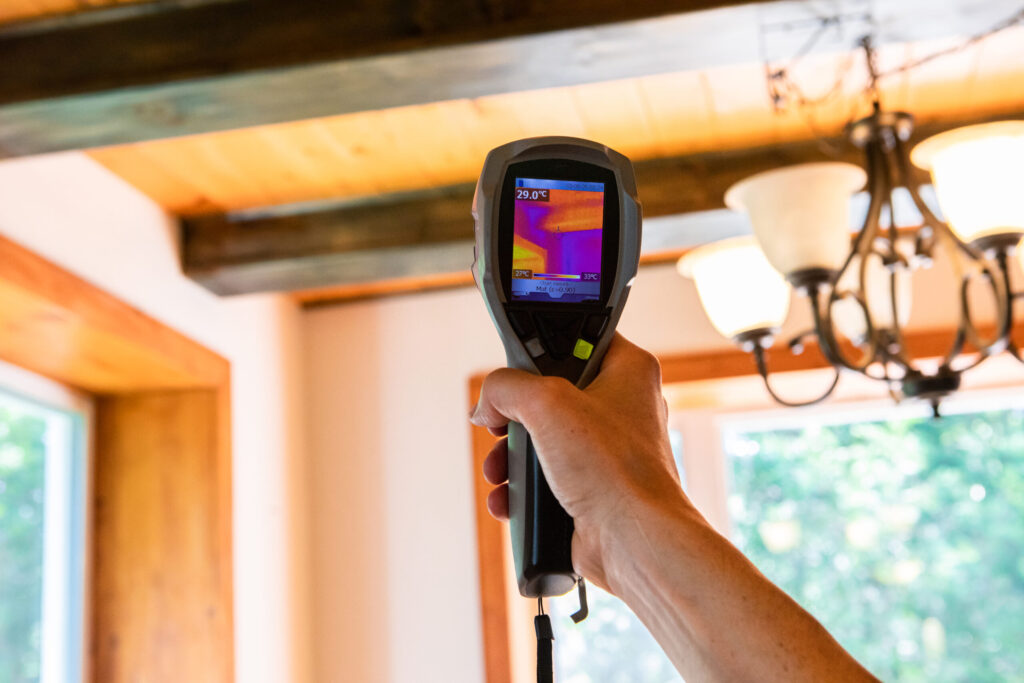


Mold Testing in Argyle, Texas
Mold Testing After a Plumbing Leak in Argyle
A supply line lets go behind a laundry wall. A water heater fails in a utility room. A slab leak turns up as a warm patch on a tile floor. The water gets shut off, the towels come out, and a week later there is a smell at that end of the house.
Mold testing after a leak has one job, which is to establish what the water reached. That is most of what we get called about in Argyle. Mold Test DFW performs assessment only. We do not remediate, and we do not hand the work to a company we hold an interest in. What comes back is a written record of what is wet, what is affected, how far it extends, and what put the water there.
Contiguous Is the Word That Matters
Texas draws exactly one number in this trade, and it is worth knowing. Under Texas Occupations Code Sec. 1958.102(c), a person performing remediation where the contamination affects a total surface area of less than 25 contiguous square feet does not need a license under the chapter. Roughly a five-foot square.
Sec. 1958.102(a) makes the same point from the owner’s side. An owner or tenant, or their managing agent or employee, may work on property they own or lease without a license. That stops applying if they are in the business of doing this work for the public, or if the remediation affects a total surface area of 25 contiguous square feet or more.
The word doing the work in both places is contiguous. It means one connected area, not the total of several separate ones, and it does not stop at the edge of what you can see.
100% Privacy Guarantee
What the Licensing Threshold Does Not Say
Before going further, it is worth being clear about what that threshold is not. It is a licensing rule. It says who needs a license to perform the remediation, and nothing else.
It does not describe a condition of the building. It is not a safety line, and crossing it does not make a situation dangerous any more than staying under it makes one harmless. Anybody who quotes the number at you as though it were a health finding has misread the statute. What it genuinely decides is who is allowed to do the work, and whether the job produces the documentation that licensed work produces. Mold testing answers a different question, which is how large the affected area actually is.
100% Privacy Guarantee
Why Open Floor Plans Cross the Line Sooner
Here is where the arithmetic surprises people. A slab leak under a great room can wick outward through a continuous run of baseboard, drywall and cabinet toe-kick without ever putting a second mark on a wall. That whole run is one contiguous area.
Larger rooms, longer uninterrupted wall runs and open floor plans all push in the same direction. Instead of several small patches with dry material between them, you get one connected patch, and one connected patch reaches 25 square feet quickly. A five-foot square is not much floor. Established by mold testing rather than by eye, a leak that looked minor sometimes turns out to be licensed remediation work, and a leak that looked alarming sometimes does not.
100% Privacy Guarantee
One Property, Several Buildings, One Water Line
Properties around Argyle often hold more than one structure. There is the house, and then some combination of a barn, a shop, a detached garage, guest quarters, a tack room, a pump house. Each has its own envelope, its own ventilation, and frequently its own plumbing branch.
A leak at a frost-proof hydrant, a burst line in an unheated shop, or a failed fitting on a pressure tank can run a long while before anyone walks past it. So tell us which structures share a water line with the one that leaked, and mold testing can be planned around the whole affected run rather than a single room.
When There Is No Meter to Warn You
A property on a private well and an on-site septic system loses the warning system that a municipal connection provides. There is no monthly consumption reading to show an unexplained jump, so a slow leak announces itself only through a pump that cycles more often than it used to. If somebody noticed that happening, the date they noticed is useful information. Mold testing on a well-served property leans on that kind of history.
Where a septic field sits relative to a foundation or a crawl space also changes how moisture on that side of a building gets read. A saturated field and a failed supply line can produce similar readings at a wall base, and telling them apart matters because they send you to different trades. Any sign of either belongs in the written findings rather than in a verbal aside.
How Argyle Ended Up With the Buildings It Has
Argyle is on U.S. Highway 377 and the Missouri Pacific Railroad in southwestern Denton County. It was founded on November 7, 1881, when James Morrill was given authority to build and maintain a depot, and it spent most of the next century as farm country. Settlers ran cattle first. Later came wheat, oats and cotton, and after the gin burned in 1930 the farmers turned to peanuts.
The population figures tell the rest. Argyle held 148 people in 1890 and 238 in 1930, then fell to 90 by 1950. The town voted to incorporate on September 19, 1960 and did so in 1962, with roughly 125 residents. It reached 1,575 by 1990 and 2,365 by 2000.
What that means practically is a building stock with almost nothing in the middle. A small number of genuinely old structures, and then a great deal built during and after the run-up that started in the 1980s, much of it on land that had been pasture. The plumbing, the grading and the mechanical systems in those two groups fail in different ways, and mold testing starts by establishing which group a building belongs to.
Four Dates to Have Ready Before Mold Testing
Four dates shape a mold testing visit, and they are worth having ready before you call.
- the date the leak was found
- the date the water was shut off
- what was done to dry it, and for how long
- whether the plumbing repair is finished or still pending
That last one changes the sequence rather than the price. There is no point establishing a boundary on an assembly that is going to be reopened next week, so a pending repair usually means waiting a few days. A repair already completed is the right moment, because the moisture source is closed and what remains to establish is how far the water traveled and what it reached.
Following the Water Instead of the Failure
Mold testing follows the water rather than the failure. That means reading every assembly the wetted path touched, not only the spot where the pipe let go. The list usually includes floor covering, slab or subfloor, base plate, insulation, cabinet boxes, and the back side of any surface that sat against wet material.
Boundaries get recorded as measurements, because the boundary is the fact that decides the scope. Where a determination turns on laboratory analysis, samples are collected and sent for analysis, and each result is reported with the location it describes.
Where the findings support remediation, the written protocol identifies the rooms and structures, the material quantities, the methods and the proposed clearance criteria. That document goes to a licensed remediation contractor of your choosing.
Nearby Mold Testing Service Areas
Trusted Mold Testing Resources
- CDC guidance on mold and moisture, on drying wet materials quickly and keeping indoor humidity down
- EPA mold resources, on why moisture control is the control that matters
See Our Reviews in Argyle and Greater DFW


He was able to get in, do a complete thorough walkthrough, send samples off to the lab, and write a report up for us (that included a massive amount of broken down details), all before our option period ended.
Highly recommend using this company for anything, they definitely don’t disappoint!



What really stands out is how easy he is to work with. Ryan makes the entire process smooth and stress-free. His attention to detail with paperwork is also top-notch—everything is always accurate, complete, and submitted promptly.
If you're looking for someone reliable, knowledgeable, and genuinely dedicated to their work, Ryan is the one to call. Highly recommended. United Water Restoration group Arlington, Texas Operations Manager, James Johnson

From the very beginning, Ryan was outstanding—he explained the testing process clearly, answered all of our questions, and made the entire experience stress-free. The appointment was scheduled quickly, and he arrived right on time with all of his professional equipment.
What really impressed us was how thorough and detail-oriented Ryan was. He didn’t just take air and surface samples—he explained each step of the process so we understood how the testing works and what the results would show. He was professional, respectful of our home, and very transparent about what he was doing.
Compared to other companies we’ve used in the past, Mold Test DFW was by far more honest and customer-focused. The final report was easy to understand, very comprehensive, and gave us peace of mind to move forward with the right remediation decisions.
If you need accurate, reliable, and trustworthy mold testing, I highly recommend Mold Test DFW. Ryan went above and beyond, and we’ll absolutely call them again in the future if we ever need testing.
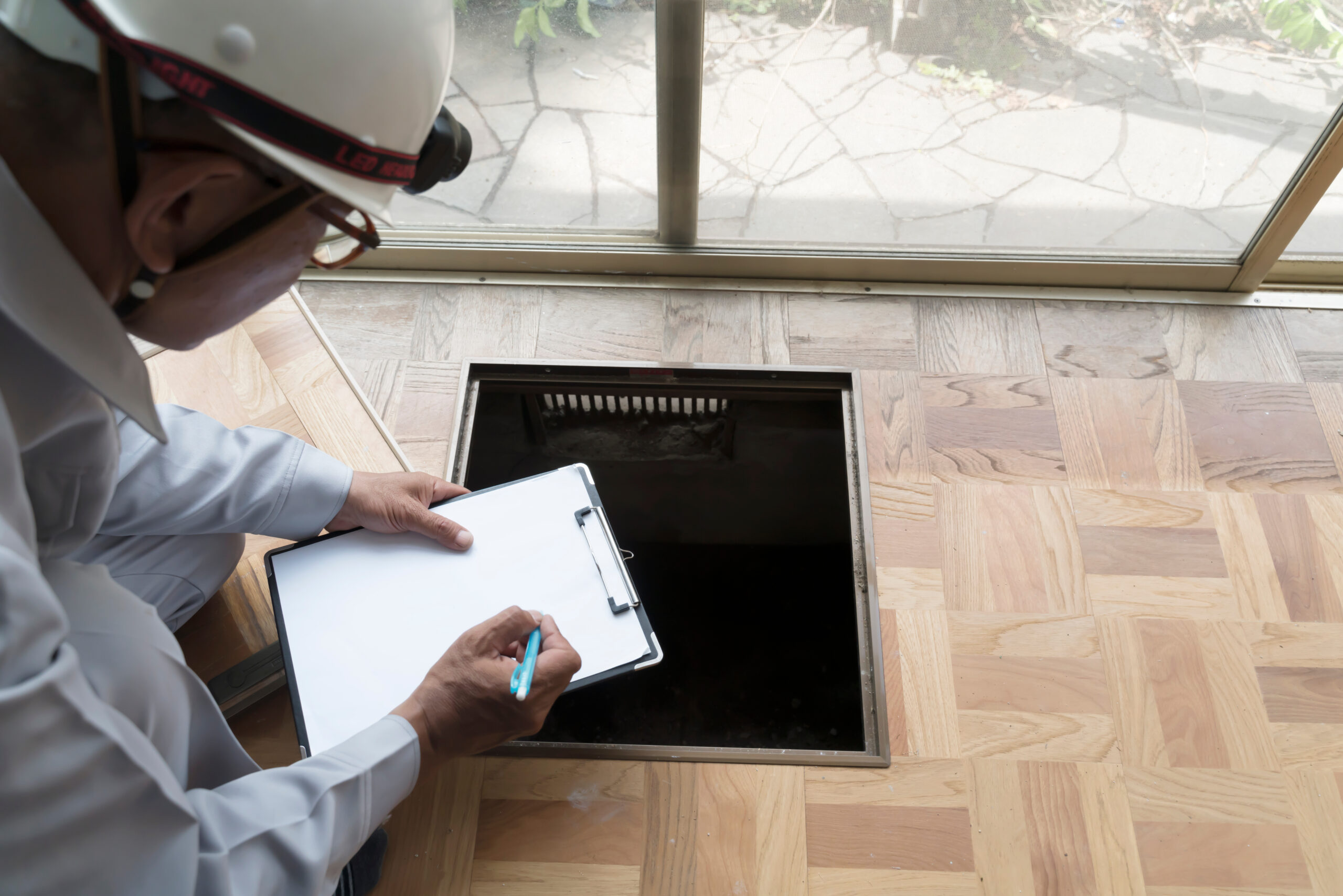
Why We Cannot Bid the Remediation
We are barred from bidding the remediation on a project we assessed. Sec. 1958.155 keeps a license holder off the remediation side of a project it assessed, ownership interests included. That restriction is what keeps a measured boundary honest, because the party drawing the line has no stake in where it lands.
What the Written Report Establishes
A mold testing report states findings, locations and measured extent. That is the factual record an adjuster, a contractor or a lender works from, and it is deliberately written so somebody who was not in the building can follow it.
Coverage decisions are not ours, and neither is the repair scope beyond the remediation protocol. Where the evidence stops, the report says where it stops rather than filling the gap with an assumption.
What Mold Testing Does Not Cover
A mold assessment is not a systems inspection. We do not evaluate the well, the septic system, the plumbing or the mechanical equipment as systems, and we do not date the water. Readings and the pattern of affected material support statements about extent and about whether moisture is still arriving, not a calendar.
Health questions belong with a physician. What mold testing settles is a building question: what is present, on which materials, over what measured area, and what water source put it there.
Start With the Date the Leak Was Found
Start with the date the leak was found and the date the water went off. Tell us whether the repair is finished, which structures share that water line, and whether the property is on a well. If an insurance claim is open, say so, because the report is written to be read by people who were not there.
Mold Testing Questions After a Leak
My leak looked small. Does the 25 square feet rule mean I can handle it myself?
Sec. 1958.102(c) exempts remediation affecting less than 25 contiguous square feet from the chapter’s licensing requirements, and Sec. 1958.102(a) exempts an owner or tenant working on their own property on similar terms. Whether your affected area falls under that line is a question of measurement, not appearance, and measuring it is what an assessment does.
How is the affected area actually measured?
By reading moisture across the assemblies the water touched and finding where the wet material ends. That edge is frequently well past the visible mark, and it is recorded as a dimension so the number can be checked by somebody else. Appearance is a poor guide in both directions.
My house is on a well. Does that change the testing?
The method is the same. The investigation changes, because a private system gives you no consumption record to compare against. That makes the history useful instead: when the pump started cycling more often, and whether pressure behaved differently before the leak was found.
The plumber has already fixed the pipe. Is testing still worth doing?
Yes, and a finished repair is the right moment. The moisture source is closed, so what remains to establish is how far the water traveled and what it affected. A pending repair usually means waiting a few days, because there is no point measuring an assembly that is about to be reopened.
Will the report say what my insurer needs?
It states findings, locations and measured extent, which is the factual record a carrier or an adjuster works from. Coverage decisions belong to them. Tell us if a claim is open so the report is written with that reader in mind.
Is a well or septic problem part of a mold assessment?
Not as a systems inspection. Where moisture near a foundation or crawl space points toward a saturated field or a failed line, the findings say so and name the trade that should evaluate it. Distinguishing those two is often the useful part, because they send you to different people.
What if the property has more than one building?
Tell us which structures share a water line with the one that leaked, and what each is used for. An unconditioned building holds and releases moisture on a different schedule than a conditioned one, so the same leak reads differently in a shop than in a living room. Let us know what is on the property when you call and we will tell you what the visit can cover.