

Mold Testing in Burleson, Texas
Mold Testing Before You List a Burleson Home
Sellers call at one of two moments. The first is before the sign goes up, after somebody noticed a stain in a back bedroom while the house was being cleared out. The second is after a contract fell apart, when a buyer’s inspector wrote one line about possible mold and the buyer walked instead of negotiating.
The second call costs more than the first, and it is the same underlying problem either way. A finding with no boundary and no defined endpoint reads as unlimited risk, and unlimited risk gets priced by whoever in the deal is most nervous. What ends that is a written scope with an edge and a stated definition of finished. Mold testing is how that scope gets built.
Mold Test DFW is a mold testing and assessment company. We write the documentation and we perform no remediation, so the size of any repair has no effect on what we bill.
Two Mold Testing Calls, One Problem
The difference between those two calls is control of the calendar. Before listing, you can define the work, take bids against one document, have it done, and put the paperwork in the file. After a contract dies, all of that has to happen inside somebody else’s option period while an agent asks for daily updates.
Nothing about the building changes between those two scenarios. What changes is who sets the pace, and how much room there is to get a defensible answer rather than a fast one. Mold testing before listing buys that room.
100% Privacy Guarantee
The Work Analysis Texas Requires
Texas requires a specific document here, and it is the most useful thing in this trade for somebody about to sell. Under Texas Occupations Code Sec. 1958.151, a license holder who intends to perform mold assessment on a remediation project prepares a work analysis for that project, and provides it to the client before remediation begins. The statute says the work analysis must specify:
- the rooms or areas where the work will be performed
- the quantities of materials to be removed or cleaned at the project
- the proposed methods for each type of remediation in each type of area
- the proposed clearance criteria for each type of remediation in each type of area
Each of those four does work for a seller. Rooms gives the project an edge, so one contractor is bidding the same boundary as the next. Quantities means the demolition is counted in advance rather than discovered halfway through, which is what keeps a change order from turning into a renegotiation. Methods means each type of material is matched to an approach before anyone starts, so the remediator executes a plan instead of writing one at your expense. Mold testing on a project headed for remediation is what produces the document.
100% Privacy Guarantee
Clearance Criteria Are What Close a Sale
The fourth item is the one that closes a transaction. Clearance criteria are the conditions that will be used to decide the work is finished, and the statute puts them in writing before the work starts.
That is the whole difference between a repair somebody says is done and a repair that met a standard set in advance by a party with no financial stake in the answer. Try explaining to a buyer that a mold repair is complete when nobody defined complete beforehand. The conversation does not go well, and it is the reason a seller who skips this step often ends up negotiating twice. Mold testing sets that bar before anyone swings a hammer.
100% Privacy Guarantee
Burleson Sits in Two Counties
Burleson sits in northern Johnson County and southern Tarrant County, and sellers here run into that split constantly. The appraisal district holding your record, the tax statements a title company pulls, and the county field on the listing all depend on which side of the line the parcel falls.
The statute is state law, so nothing about the assessment or the documentation changes across that line. What matters practically is that the mold paperwork belongs in the document package alongside those records, carrying the same address and parcel identifiers they do. A mold testing report that does not match the tax record is a question somebody will raise at the worst possible moment.
Two Building Generations in One City
What the Population Curve Tells You
Burleson has two clearly different building generations, and the census figures show where the line falls. The town held 200 people in 1890, 368 in 1904, and 241 in 1920. It reached 573 by 1940 and 795 by 1950. Then it went to 2,345 in 1960, 11,734 in 1980, 16,113 in 1990, 20,976 in 2000, and 47,641 at the 2020 census, across 28.26 square miles.
The older core grew up around the railroad. The MKT planned a line from Fort Worth to Hillsboro in 1881 and put a depot on the townsite. State Highway 21 was built through Burleson from Fort Worth to Alvarado in 1924, and an interurban ran between Cleburne and Fort Worth starting in 1912. Houses from that era bring galvanized or cast drain lines, small-dimension framing, and roof lines that have been altered more than once. The subdivisions that followed the growth curve bring slabs, attic air handlers and condensate lines. Mold testing reads those two groups differently because they fail differently.
Shannon and Village creeks both run through the community, so lot drainage is not uniform across town. About 72.1 percent of homes are owner-occupied, which means a lot of Burleson listings are houses one family has held for a long time. Long tenure tends to mean repairs that were done properly and never documented. Mold testing here starts with which side of that curve a house sits on.
Timing Mold Testing Around Your List Date
Do this before the photographer comes, while the calendar still belongs to you. The useful sequence is mold testing first, then bids against one document, then the work, then the closeout paperwork in the file. Run it in that order and none of it happens under time pressure.
It is worth asking us what the report turnaround looks like for the week you are in and measuring that against your target list date, rather than discovering the gap afterward. If the date is tight, say so at the start and we will tell you what is workable.
If remediation is warranted, the work analysis is what you circulate for bids. Sec. 1958.155 bars us from taking that job, which is exactly what makes the document worth handing to a stranger. You pick the contractor, hold them to the written criteria, and the closeout produces a certificate issued against those same criteria.
Tell Us About the Old Repairs Too
Tell us what you have seen, where, and when you first noticed it. Then tell us every water event you can remember at the address, including the ones that were fixed years ago and the ones you think are irrelevant.
That last part matters more than sellers expect. Old repairs are history, not an admission, and they are frequently the fastest route to the answer. A supply line replaced in a back wall eight years ago explains a reading that would otherwise take an afternoon to chase, and mold testing goes faster with that history in hand. Nobody is looking for a reason to expand the scope, because we do not have the scope.
What Mold Testing Measures
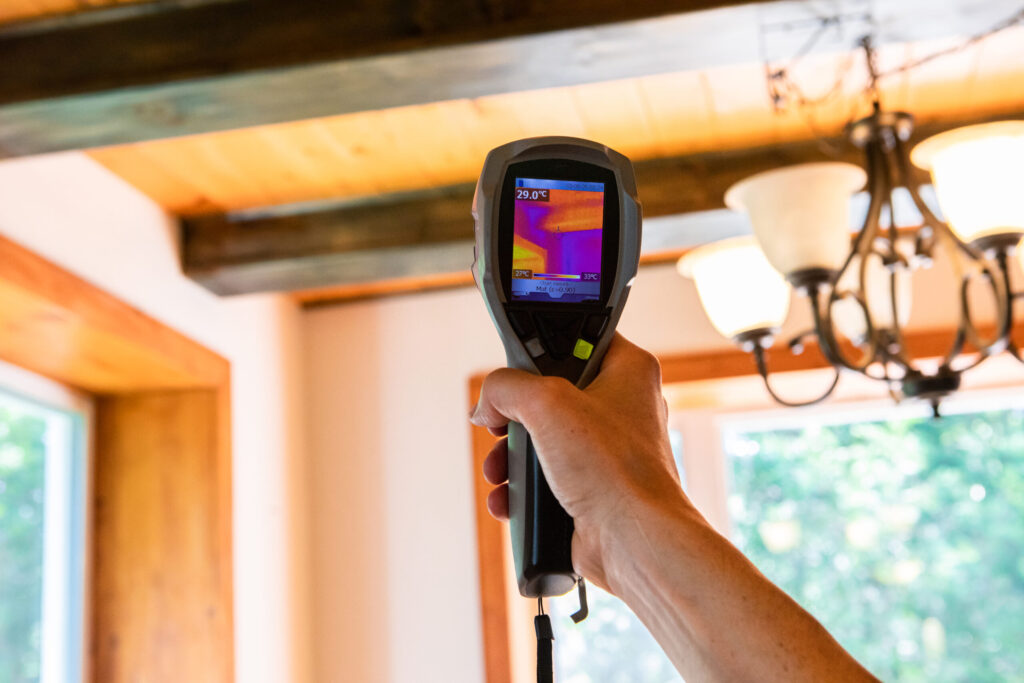
Mold testing on site covers the areas of concern and the assemblies connected to them. Moisture readings go across the affected material and the surfaces around it, and the extent of any affected area is measured rather than described.
Where a finding depends on laboratory analysis, samples are collected and sent for analysis, and each result is reported with the location it describes. Where a conclusion would require opening something nobody has opened, the report says that plainly instead of filling the gap.
See Our Reviews in Burleson, TX and Greater DFW


He was able to get in, do a complete thorough walkthrough, send samples off to the lab, and write a report up for us (that included a massive amount of broken down details), all before our option period ended.
Highly recommend using this company for anything, they definitely don’t disappoint!



What really stands out is how easy he is to work with. Ryan makes the entire process smooth and stress-free. His attention to detail with paperwork is also top-notch—everything is always accurate, complete, and submitted promptly.
If you're looking for someone reliable, knowledgeable, and genuinely dedicated to their work, Ryan is the one to call. Highly recommended. United Water Restoration group Arlington, Texas Operations Manager, James Johnson

From the very beginning, Ryan was outstanding—he explained the testing process clearly, answered all of our questions, and made the entire experience stress-free. The appointment was scheduled quickly, and he arrived right on time with all of his professional equipment.
What really impressed us was how thorough and detail-oriented Ryan was. He didn’t just take air and surface samples—he explained each step of the process so we understood how the testing works and what the results would show. He was professional, respectful of our home, and very transparent about what he was doing.
Compared to other companies we’ve used in the past, Mold Test DFW was by far more honest and customer-focused. The final report was easy to understand, very comprehensive, and gave us peace of mind to move forward with the right remediation decisions.
If you need accurate, reliable, and trustworthy mold testing, I highly recommend Mold Test DFW. Ryan went above and beyond, and we’ll absolutely call them again in the future if we ever need testing.
Circulating the Work Analysis for Bids
Hand the work analysis to more than one remediation contractor. That is the point of having it. Bids written against a defined document can be compared line by line, and the differences between them are about labor and schedule rather than about who guessed at a bigger job. The work analysis comes out of mold testing, not out of the bid.
A bid written against a walkthrough is a different animal. Two numbers that look far apart usually turn out to cover different work, and there is no way to tell from the paperwork which one is right.
The Certificate Goes in Your Closing File
When the remediation contractor closes out, Sec. 1958.154(a) requires a certificate of mold remediation within ten days. That certificate carries a mold assessment license holder’s statement that, on visual, procedural and analytical evaluation, the identified contamination was remediated as the plan or protocol set out.
Put it in the closing file. Under Sec. 1958.154(b), a selling owner must give the buyer a copy of each certificate issued for the property in the five years before the sale. A seller who produces that without being chased has removed the last open question from the deal, which is worth more at the table than it costs to obtain.
Mold Testing Across Johnson and Tarrant Counties
We assess property across Johnson and Tarrant counties and the wider metroplex. We also publish pages for Mansfield, Arlington and Dallas, with the full list on our areas served page. Rental and multi-family property is covered on our apartment mold testing page.
For background on why moisture is the thing worth controlling, the EPA mold resources are a reasonable place to start.
Do This While the Calendar Is Still Yours
Tell us the address, what you have seen and where, and your target list date. Mention any water event at the property, however old. What comes back from mold testing is a written record with a boundary and, where the work is warranted, a document you can hand to three contractors and get three comparable numbers.
Seller Questions About Mold Testing
Should I test before listing, or wait to see if a buyer asks?
Testing first gives you time to define the work, take bids against one document and finish on your own schedule. Waiting means doing all of that inside an option period with a nervous buyer setting the pace. The building is the same either way. The leverage is not.
What is a work analysis, and who writes it?
It is the document Sec. 1958.151 requires the mold assessment license holder to prepare for a remediation project, and to provide before remediation begins. It specifies the rooms or areas, the quantities of material to be removed or cleaned, the proposed methods, and the proposed clearance criteria. The assessor writes it, which is why the remediator is not the one defining the size of their own job.
What are clearance criteria?
The conditions that will be used to decide the remediation is finished. Sec. 1958.151 requires them to be proposed for each type of remediation in each type of area, in writing, before the work starts. That is what lets you tell a buyer the repair is complete and point at the standard it met.
Do I have to disclose this on the seller’s disclosure notice?
Ask your agent or attorney about the notice itself, because that turns on Texas property law rather than the mold chapter. What the mold chapter requires directly is under Sec. 1958.154(b): a selling owner gives the buyer copies of any certificates of mold remediation issued for the property in the preceding five years.
My house is in the Tarrant County part of Burleson. Does that change anything?
Not the assessment or the documentation, since the statute is state law. What changes is which appraisal district and tax records your title company works from. Make sure the address and parcel identifiers on the report match those, because a mismatch becomes a question at closing.
A contract already fell through over this. What should I do differently?
Get the boundary established and the work defined now, outside anyone’s option period. Relisting with a written scope, a completed repair and a certificate is a materially different proposition than relisting with the same open line in a report. The first buyer walked because the risk had no edge on it.
Should I send the work analysis to more than one contractor?
Yes, and that is most of its value. Bids written against the same document differ on labor and schedule rather than on how much each company guessed the job might grow. Bids written against a walkthrough cannot be compared at all, because you have no way of knowing what each one covers.